
There is no official GLP-1 diet. Here is how to build meals around protein, fiber and fluids, and what to limit, with sources.
There is no official GLP-1 diet. The GLP-1 diet is ordinary healthy eating adjusted for a smaller appetite: protein and fiber at every meal, smaller meals, plenty of fluids, and less of the greasy, spicy and sugary foods that can upset your stomach. This guide explains why, what the drug labels and published reviews say, and what to ask your prescriber.
This article is general nutrition information. It is not medical advice or a dose recommendation. Your prescribing provider sets your dose.
What is the GLP-1 diet?
The “GLP-1 diet” is a search term, not a medical plan. GLP-1 medicines such as semaglutide and tirzepatide lower your appetite, so most people eat less. The diet question is what to put on the plate when there is less room for it.
The prescribing information for Wegovy (semaglutide) says it is used together with a reduced-calorie diet and increased physical activity. The National Institute of Diabetes and Digestive and Kidney Diseases (NIDDK) says the same thing in plain words: weight-loss medicines do not replace physical activity or healthy eating habits. So the medicine and the food work together.
Why does food feel different on a GLP-1?
Cleveland Clinic explains it in two parts. GLP-1 medicines change the way your body signals hunger and digests food. Food also stays in your stomach longer.
- You eat less. Your appetite is lower, so each meal has to do more work. Your body still needs a full range of nutrients.
- Some foods sit badly. Because food lingers, spicy and high-fat foods can contribute more to stomach side effects such as nausea.
That is the whole logic of the diet: get enough nutrition from a smaller amount of food, and go easy on the foods that are hardest on a slower stomach.
What should you eat on a GLP-1?
Cleveland Clinic’s general advice is to choose nutritionally packed foods. Two nutrients matter most: protein and fiber. Both help you feel full for longer. Protein also helps your body lose fat rather than muscle, and fiber helps with the constipation a GLP-1 can cause.
| Food group | Examples | Why it helps |
|---|---|---|
| Lean protein | Fish, chicken, tofu, beans | Keeps you full and helps protect muscle |
| Fruit and vegetables | Leafy greens, apples, tomatoes | Nutrient-dense and a source of fiber |
| Whole grains | Oats, quinoa, farro | A source of fiber, which helps with constipation |
Examples are from Cleveland Clinic’s GLP-1 diet guidance, linked in the sources below.
How do you build a plate when you are not very hungry?
Start with the protein, because it is the part you most want to finish if you can only eat a little.
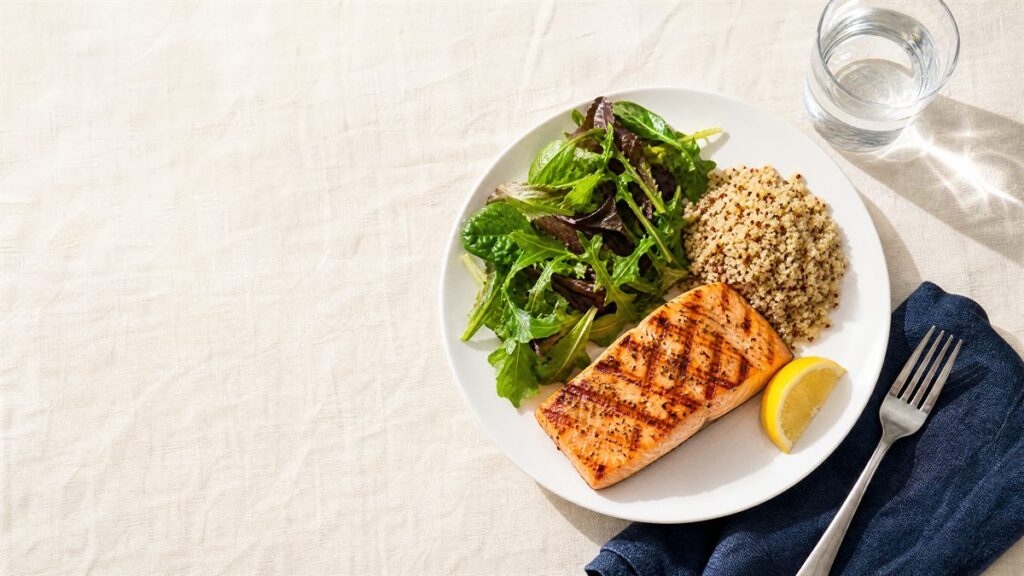
- Begin with a lean protein: fish, chicken, tofu or beans.
- Add vegetables or fruit.
- Add a whole grain such as oats, quinoa or farro if you have room.
- Drink water with the meal, and keep a glass nearby between meals.
A small plate like this is not a meal plan. It is a pattern you can repeat. If a full plate feels like too much, eat less at one time and eat again later.
How much protein do you need on a GLP-1?
Experts do not agree on one number. A 2026 review of lifestyle care on newer weight-loss medicines compares several published recommendations, and they differ. The review also notes that hitting a high protein target may be hard for people with stomach side effects and a reduced appetite.
| Protein range suggested | Where it appears |
|---|---|
| At least 0.8 g per kg of body weight per day, or more depending on BMI | One recommendation listed in the 2026 review |
| 1 to 1.5 g per kg per day | 2025 review of muscle health on incretin-based medicines |
| 1.2 g per kg per day, or 80 to 120 g per day | One recommendation listed in the 2026 review |
| 1.5 g per kg of fat-free mass, or 80 to 120 g per day | Targets the 2026 review says have been suggested |
These are ranges that researchers have proposed, not a target for you. Your own number depends on your size, age, health conditions and kidney function, so ask your prescriber or a registered dietitian.
The same reviews recommend strength training. The 2026 review says resistance training two to three times per week can reduce the loss of lean mass during weight loss. The federal guidelines quoted by NIDDK are at least 150 minutes a week of moderate aerobic activity and at least 2 days a week of muscle-strengthening activity.
Do fiber and water matter on a GLP-1?
Yes, for two different reasons.
Fiber. Cleveland Clinic names fiber as a way to combat GLP-1 constipation. The 2026 review lists a general fiber recommendation of 21 to 25 g a day for women and 30 to 38 g a day for men, and a fluid recommendation of 2 to 3 liters a day. Treat those as reference ranges to discuss with your provider, not a goal to chase on day one.
Fluids. This one is a safety point. The Zepbound prescribing information says acute kidney injury has been reported and can result from dehydration caused by nausea, vomiting and diarrhea. The Wegovy label tells patients to take precautions to avoid fluid depletion. MedlinePlus says that if you cannot drink liquids by mouth, that may cause dehydration and you should tell your doctor.
What should you limit on a GLP-1?
Cleveland Clinic suggests limiting or avoiding these in general, because they can make side effects worse:
- Added sugar: juice, soda, candy and desserts.
- Refined carbs: white bread, crackers and white rice.
- Processed foods: packaged snacks.
- High-fat foods: pizza and fried chicken.
- Spicy foods: hot sauce and hot peppers.
“Limit” does not mean “never”. Cleveland Clinic also says every body is different and it can take time, and some trial and error, to find what sets off your symptoms. A food diary can help you spot the pattern.
Alcohol is a topic of its own. Our guide Tirzepatide and alcohol: what to know before you drink covers it.
What helps with nausea, constipation and feeling too full?
Stomach side effects are the most common reason food becomes hard. In the clinical trials listed on the brand-name Wegovy label (2.4 mg injection, adults with obesity or overweight), these were the most frequent:
| Side effect | Placebo | Wegovy 2.4 mg |
|---|---|---|
| Nausea | 16% | 44% |
| Diarrhea | 16% | 30% |
| Vomiting | 6% | 24% |
| Constipation | 11% | 24% |
| Abdominal pain | 10% | 20% |
Source: Wegovy prescribing information, adverse reactions table. These figures describe the brand-name trial, not a prediction for you or for any other product.
Food habits that reviewers and Cleveland Clinic point to:
- Eat small, frequent meals, about every 3 to 4 hours, instead of a few large ones.
- Avoid eating late at night.
- Drink enough fluid through the day.
- Choose lower-fat, higher-fiber foods. The 2026 review says these may help reduce stomach side effects.
- Go easy on spicy and high-fat foods if they set off nausea.
When to call your provider. Tell them if nausea, vomiting or diarrhea is severe or does not go away, or if you cannot keep fluids down. The Wegovy label also lists persistent or severe abdominal pain, sometimes spreading to the back, as a possible sign of pancreatitis, so do not wait that out. Our guide to GLP titration side effects covers what to expect as the dose changes.
Where does your prescriber fit in?
Food advice sits alongside your treatment plan, it does not replace it. After you complete the free intake form, a licensed provider reviews your health before anything is prescribed and sets your dose. Ask whether a registered dietitian would help, especially if you have a medical condition or you find it hard to eat enough. Cleveland Clinic and MedlinePlus both point people to a dietitian or doctor for an eating plan.
If you are still comparing options, the tirzepatide pricing and programs page lists the current plans.
Frequently asked questions
What is the GLP-1 diet?
It is not an official diet. It means ordinary healthy eating adjusted for a lower appetite: protein and fiber at each meal, smaller meals, enough fluids, and less of the high-fat, spicy and sugary foods that can worsen stomach side effects.
What foods should I eat on semaglutide or tirzepatide?
Cleveland Clinic suggests lean protein such as fish, chicken, tofu and beans, fruit and vegetables such as leafy greens, apples and tomatoes, and whole grains such as oats, quinoa and farro.
What foods should I avoid on a GLP-1?
Cleveland Clinic suggests limiting added sugar, refined carbs, processed foods, high-fat foods and spicy foods, because they can make side effects worse. Every person reacts differently, so a food diary can help you find your own triggers.
How much protein should I eat on a GLP-1?
Published recommendations range from at least 0.8 g per kg per day to 1.5 g per kg of fat-free mass, and some give 80 to 120 g a day. Experts do not agree on one number. Ask your prescriber or a registered dietitian for a target that fits you.
Why do I feel full so fast on a GLP-1?
GLP-1 medicines lower appetite and food stays in your stomach longer, so you feel full sooner. Smaller, more frequent meals can help.
Do I need to drink more water on a GLP-1?
Enough fluid matters. Dehydration from nausea, vomiting or diarrhea has been linked to kidney injury in the prescribing information, so tell your provider if you cannot keep fluids down.
Do I still need to watch what I eat on a GLP-1?
Yes. The Wegovy label says it is used with a reduced-calorie diet and increased physical activity, and NIDDK says medicines do not replace healthy eating or activity.
Sources
- Cleveland Clinic: GLP-1 Diet, What to Eat and Avoid
- Peary et al., 2026, lifestyle interventions with second-generation obesity medicines (Current Atherosclerosis Reports)
- De Girolamo et al., 2025, muscle health in the era of incretin-based therapies (European Journal of Clinical Investigation)
- Wegovy prescribing information (DailyMed)
- Zepbound prescribing information (FDA)
- MedlinePlus: semaglutide injection
- NIDDK: prescription medications to treat overweight and obesity
More from this guide series
Next step
To see whether a prescribed GLP-1 is right for you, start the free intake form. The clinic will contact you to schedule an appointment, and a licensed provider reviews your health before anything is prescribed.